
Some travel destinations stop you mid-scroll. Others stop you mid-breath when you’re actually standing in them. The world has no shortage of beautiful places, but a handful of them carry a quality that’s genuinely hard to explain: a combination of landscape, light, culture, and atmosphere that makes you understand, in a very concrete way, why people cross the planet just to stand somewhere.
This is our list of the 10 most beautiful places in the world, not ranked by tourism data or Instagram follower counts, but chosen for the kind of beauty that stays with you long after the photos are taken. For each one, we’ve included the best time to visit, what makes it genuinely worth the journey, and how to get a Commbitz eSIM so you can stay connected without the roaming bill that usually comes home with you.
Quick Navigation
- Patagonia, Argentina & Chile
- Kyoto, Japan
- The Faroe Islands, Denmark
- Cappadocia, Turkey
- Queenstown, New Zealand
- Amalfi Coast, Italy
- Salar de Uyuni, Bolivia
- Raja Ampat, Indonesia
- Iceland’s Golden Circle
- Zhangjiajie, China
1. Patagonia, Argentina & Chile – The Edge of the World
There is a particular kind of silence in Patagonia that you don’t encounter anywhere else. At the southern tip of South America, where Argentina and Chile share one of the most dramatic wilderness corridors on the planet, the landscape operates at a scale that makes you recalibrate your sense of what “big” means.
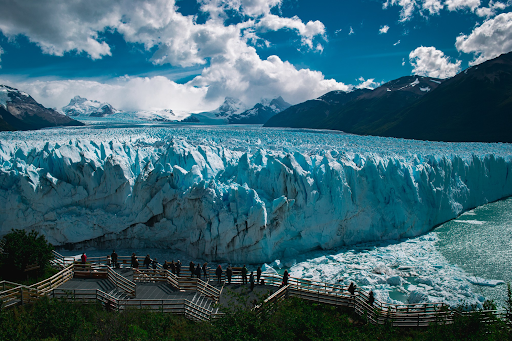
Torres del Paine National Park in Chilean Patagonia is the centrepiece, granite towers rising 2,800 metres from the steppe, glaciers calving into turquoise lakes, and pumas moving through terrain that hasn’t changed in millennia. Across the border, Argentina’s Los Glaciares National Park is home to Perito Moreno, one of the few advancing glaciers left in the world, where the sound of ice cracking and collapsing into Lago Argentino is genuinely unlike anything else in nature.
Best time to visit: November to March (Southern Hemisphere summer). The shoulder months of November and March offer fewer crowds and nearly equal conditions.
What most visitors miss: The W Trek in Torres del Paine can be done independently with pre-booked refugios you don’t need a guided tour. And the Argentine side (El Chaltén, Fitz Roy) is significantly less crowded than the Chilean circuit.
Practical note: Connectivity across Patagonia is genuinely sparse park interiors have minimal or no signal. Download offline maps before you go, and use your Commbitz Argentina eSIM or Commbitz Chile eSIM for connectivity in the gateway towns (Puerto Natales, El Calafate, El Chaltén) where you’ll need it for bookings, navigation, and emergencies.
2. Kyoto, Japan – The Aesthetic City
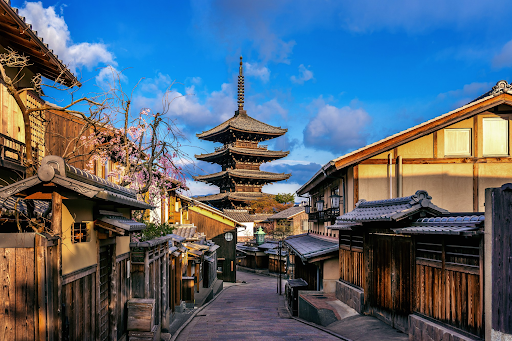
Japan has many beautiful places, but Kyoto is the one that consistently reduces first-time visitors to a state of very quiet reverence. The former imperial capital holds more than 1,600 Buddhist temples and 400 Shinto shrines but what makes it extraordinary is not the number but the density: the way a single neighbourhood like Higashiyama contains more beauty per square metre than most countries contain in their entirety.
In spring, the Maruyama Park cherry blossoms and the Philosopher’s Path become the most photographed streets on Earth. In autumn, the maple canopy at Tofuku-ji turns the temple grounds into something that looks less like nature and more like an arrangement. In winter, snow falls on Kinkaku-ji (the Golden Pavilion) and the quiet it brings to the city makes it feel entirely different from the person-to-person press of spring.
Best time to visit: Late March to mid-April (cherry blossom) or mid-November (autumn leaves) for peak beauty. January and February for tranquillity and no crowds.
What most visitors miss: Fushimi Inari after 7 pm. The crowds disappear, and you have 10,000 torii gates almost entirely to yourself. Arashiyama’s bamboo grove at 6 am works on the same principle.
Stay connected: Japan has excellent 4G/5G infrastructure across the entire country, including rural areas and mountain towns. A Commbitz Japan eSIM gives you high-speed data from the moment you land at Narita or Kansai, essential for navigating Kyoto’s public transport, translating menus, and booking restaurant reservations that require same-day confirmation.
3. The Faroe Islands, Denmark – The North Atlantic’s Best-Kept Secret
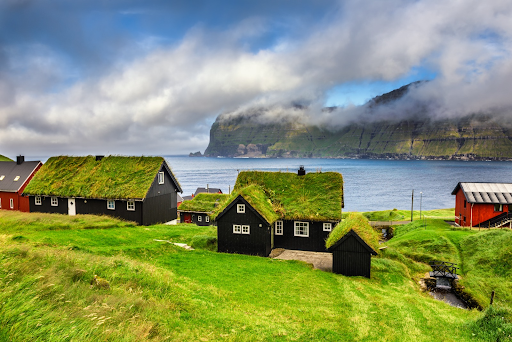
The Faroe Islands sit roughly halfway between Norway and Iceland 18 volcanic islands in the North Atlantic that most people couldn’t place on a map until about five years ago, when a particular photograph of Lake Sørvágsvatn (the lake that appears to hang suspended above the ocean) started circulating, and suddenly everyone needed to know where this place was.
The reality is better than the photograph. The Faroes have a quality of light dramatic, constantly shifting between silver and green and slate grey that makes every coastal cliff and grass-covered hilltop look like a painting that hasn’t been finished yet. The village of Gásadalur, with its single waterfall dropping over a cliff directly into the sea, is one of the most quietly spectacular, nature-beautiful places on earth. Gjógv, a natural sea gorge at the northernmost tip of Esvágoy, is equally arresting.
Best time to visit: May to August for the longest daylight hours (up to 19 hours in June) and the best weather for hiking. September and October for dramatic light and significantly fewer tourists.
What most visitors miss: The Faroes are a serious hiking destination with marked trails to viewpoints that require no guide. The Slættaratindur summit (the Faroes’ highest point at 882m) can be done in half a day and the view across the archipelago in clear weather is extraordinary.
Stay connected: A Commbitz Denmark eSIM works across the Faroe Islands. Connectivity is good in towns and along main roads, though remote hiking trails, as you’d expect, are off-grid. Download trail maps via apps like Komoot before you set out.
4. Cappadocia, Turkey – Ancient Landscape, Unforgettable Sky
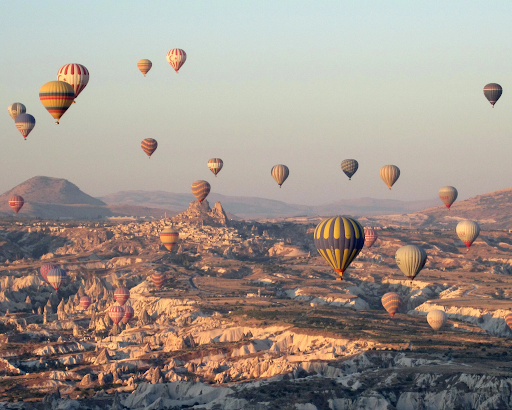
Cappadocia is the kind of place that looks like it was designed by someone who had never seen a landscape before and decided to start from scratch. The volcanic tuff formations fairy chimneys, cone-shaped spires, cave dwellings carved directly into hillsides spread across central Turkey’s Anatolia plateau in a way that is genuinely disorienting in the best possible sense.
Göreme is the gateway town, and the Göreme Open-Air Museum (a UNESCO World Heritage Site) contains Byzantine frescoes painted into rock-cut churches that have survived since the 10th century. The Ihlara Valley is a 14-km gorge with 50,000-year-old volcanic walls and more rock churches than you can visit in a day. And at dawn, somewhere between 50 and 150 hot air balloons rise over the valley simultaneously which is, by any measure, one of the most spectacular breathtaking views available anywhere in the world.
Best time to visit: April to June and September to October. Summers are hot and crowded; winters occasionally offer snow on the fairy chimneys, which is spectacular but cold.
What most visitors miss: Derinkuyu, an underground city carved eight stories below ground that housed up to 20,000 people. It is one of the most extraordinary ancient human constructions anywhere, and far fewer visitors make the 30-minute drive from Göreme.
Stay connected: Turkey has reliable 4G coverage across Cappadocia. A Commbitz Turkey eSIM keeps you connected for balloon booking confirmations, navigation between valleys, and sharing those sunrise shots before you’ve even landed.
5. Queenstown, New Zealand – The Adventure Capital That’s Also Quietly Beautiful
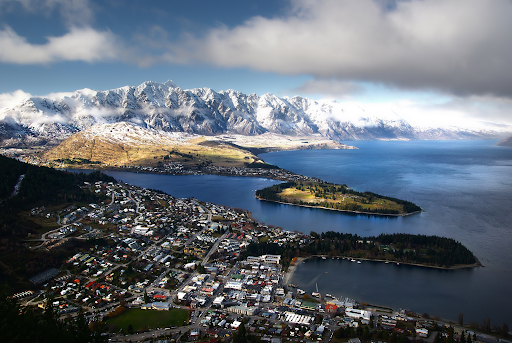
Queenstown has a branding problem: it’s marketed so aggressively as the world’s adventure capital (bungee jumping, skydiving, jet boating) that the underlying landscape it sits within rarely gets the attention it deserves. The Remarkables mountain range rising directly behind the town over Lake Wakatipu is genuinely one of the best views anywhere in the Southern Hemisphere. And the Milford Sound a two-hour drive through Fiordland National Park is the kind of place that makes the word “fjord” feel inadequate.
Beyond the adrenaline offerings, the Central Otago wine region (30 minutes north along the lake) produces some of the world’s finest Pinot Noir, and the cycling trails between wineries are among the most beautiful in the world. Glenorchy, at the northern end of Lake Wakatipu, was used as Isengard, Amon Hen, and Lothlórien in the Lord of the Rings films and looks exactly as extraordinary in person.
Best time to visit: December to February for long summer days and peak conditions. June to August for skiing on The Remarkables and Coronet Peak with far fewer non-ski tourists.
What most visitors miss: The Routeburn Track a 32-km multi-day Great Walk connecting Fiordland and Mount Aspiring National Parks. The alpine views on day two are among the finest in New Zealand.
Stay connected: New Zealand’s mobile network is excellent in and around Queenstown, though Fiordland and the Routeburn Track are predictably remote. A Commbitz New Zealand eSIM covers the urban and gateway areas reliably; download offline maps for the deep fjord sections.
6. The Amalfi Coast, Italy – Mediterranean Drama at Its Most Intense
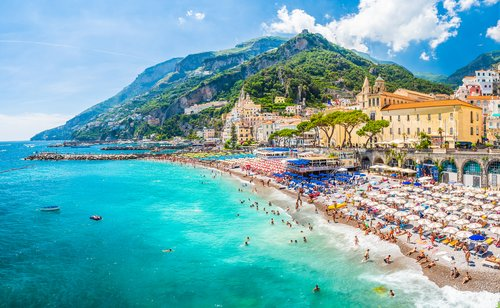
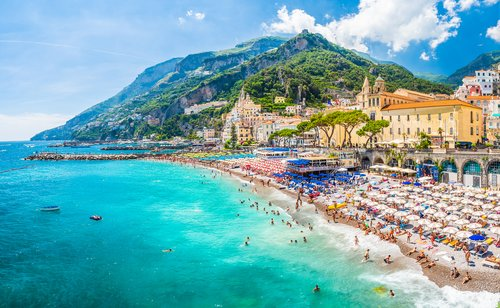
The Amalfi Coast is 50 kilometres of vertical cliff, lemon groves, painted fishing villages, and the bluest water in the Mediterranean and it has been considered one of the most beautiful places in the world for so long that even its most crowded months feel like a form of homage to somewhere genuinely deserving of the attention.
Positano is the most photographed the cascade of pink and terracotta buildings dropping to the beach makes it one of the most recognisable tourist destination images in Europe. Ravello, 365 metres above the sea, is quieter and arguably more beautiful, with Villa Rufolo’s clifftop gardens hosting a summer classical music festival with a view that Wagnerian opera was genuinely composed against. Atrani one of the smallest municipalities in Italy, tucked into a cleft in the cliffs is the Amalfi Coast that existed before the tourism industry arrived.
Best time to visit: May, June, and September. July and August are extremely crowded and hot and the single coastal road becomes genuinely gridlocked. April is beautiful if you don’t mind some rain.
What most visitors miss: The Path of the Gods (Sentiero degli Dei) a hiking trail from Agerola to Nocelle that runs along the clifftop above the coast road, with views down to Positano and across to Capri. It is the best way to see the Amalfi Coast and almost nobody does it.
Stay connected: Italy has reliable 4G coverage along the coast. A Commbitz Italy eSIM keeps you connected for ferry bookings (the boat between villages is often faster than the road), restaurant reservations, and navigation along the notoriously confusing cliff roads.
7. Salar de Uyuni, Bolivia – The World’s Largest Mirror
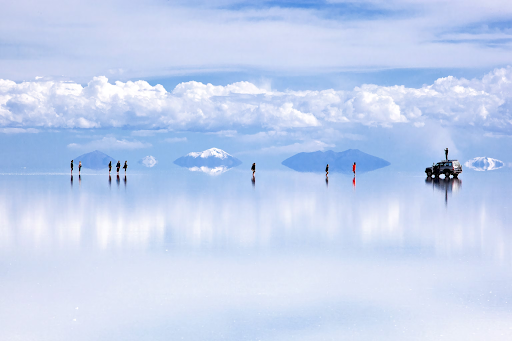
The Salar de Uyuni is the world’s largest salt flat, 10,582 square kilometres at 3,656 metres above sea level in southwestern Bolivia, and in the rainy season (November to March), a thin layer of water turns it into a perfect mirror of the sky above. The photographs look like composite images. They are not. The horizon disappears. The sky appears below your feet. It is one of the most visually disorienting and extraordinary places on Earth.
In the dry season, the salt crust produces hexagonal patterns across the entire flat surface and the blinding white expanse creates perfect conditions for the perspective photography that the Salar is famous for: people appearing to hold tiny cars and buses in their hands, optical illusions that work because there is literally no depth reference for hundreds of kilometres.
Best time to visit: November to April for the mirror effect (rainy season). May to October for the dry salt crust, better road conditions, and clear skies for stargazing. The Salar is at one of the highest, driest, and darkest locations in the world, making the night sky extraordinary.
What most visitors miss: Isla Incahuasi a cactus-covered rocky island rising from the centre of the flat. The walk to the summit takes 30 minutes and the view of nothing but white salt in every direction is unlike anything else.
Stay connected: Connectivity across the Salar is minimal. A Commbitz Bolivia eSIM works well in the town of Uyuni and on the approach roads the flat itself is off-grid. Use your connection in town to download offline maps and confirm your tour logistics before heading out.
8. Raja Ampat, Indonesia – The Last Frontier of Marine Biodiversity
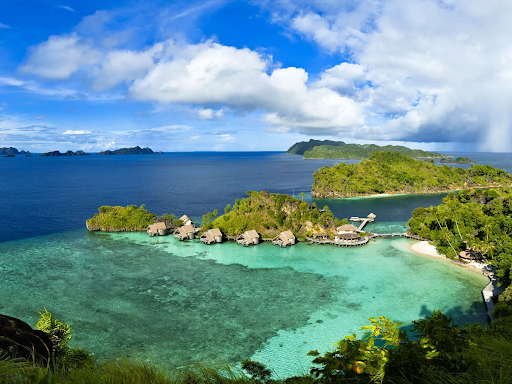
Raja Ampat is an archipelago of over 1,500 islands in West Papua, Indonesia and it sits at the heart of the Coral Triangle, the most biodiverse marine environment on the planet. Over 75% of all known coral species have been recorded here. More than 1,300 species of reef fish. Manta rays, pygmy seahorses, wobbegong sharks, walking sharks, and endemic bird of paradise species all within a geography of limestone karst islands draped in jungle rising directly from turquoise water.
On land, the viewpoint above Wayag a cluster of mushroom-shaped karst islands surrounded by shallow lagoons is the most iconic visual in all of Indonesia. Underwater, Passage Wayil and the Blue Magic dive site near Penemu Island offer visibility and biodiversity that divers consistently rate among the best experiences available anywhere in the world.
Best time to visit: October to April for the calmest sea conditions and best diving visibility. October and November specifically for manta ray season.
What most visitors miss: Raja Ampat is genuinely remote getting there involves a flight to Sorong and a ferry to Waisai, plus additional boat transfers to most dive resorts. Budget at least a week to make the journey worthwhile, and book liveaboard diving or resort accommodation months in advance.
Stay connected: A Commbitz Indonesia eSIM works well in Sorong and Waisai. The remote island resorts are largely off-grid most provide WiFi in common areas. Use your Commbitz eSIM for the transit stages and practical logistics of getting there.
9. Iceland – Fire, Ice, and the Aurora
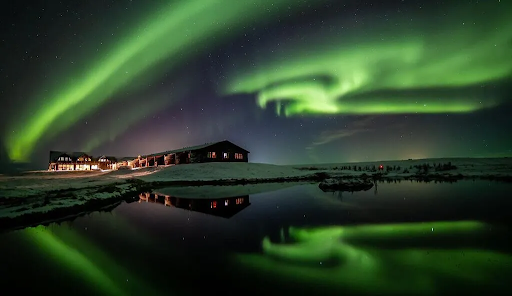
Iceland is the most geologically active place on Earth that is also actively comfortable to visit and it produces landscapes that exist nowhere else: black sand beaches where the Atlantic crashes against volcanic coastline, geysers erupting every seven minutes with geometric reliability, waterfalls that drop directly from glaciers, and a sky that, in winter, regularly fills with the green and purple light of the Northern Lights.
The Golden Circle Þingvellir National Park (where the North American and Eurasian tectonic plates meet at the surface), Geysir (where Strokkur erupts every 5–10 minutes), and Gullfoss waterfall can be done in a single day from Reykjavík and covers three of the country’s most extraordinary natural sites. The South Coast drive to Jökulsárlón glacier lagoon, where icebergs calve from Breiðamerkurjökull glacier and drift to the black diamond beach, is arguably even better.
Best time to visit: June to August for the Midnight Sun and guaranteed daylight. November to February for the Northern Lights. Iceland is visited year-round for good reason every season offers something different.
What most visitors miss: The Westfjords Iceland’s most remote region, connected to the main ring road by a single ferry. The population density approaches zero, the landscape is pristine, and the puffin colony at Látrabjarg is the largest in the world.
Stay connected: Iceland has surprisingly good 4G coverage along the ring road and in major towns. A Commbitz Iceland eSIM keeps you connected for navigation (the highland F-roads require offline maps), aurora forecast apps, and the weather monitoring that is absolutely essential for safe driving in winter.
10. Zhangjiajie, China – The Floating Mountains
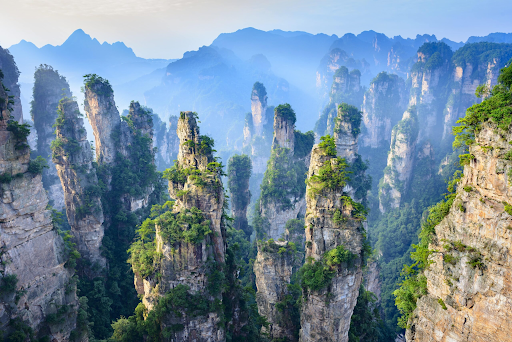
Zhangjiajie in Hunan Province contains some of the most surreal landscapes anywhere on Earth quartzite sandstone pillars rising up to 200 metres from the forest floor, draped in vegetation, frequently obscured by cloud, and forming the visual inspiration for the floating Hallelujah Mountains in Avatar. James Cameron’s production designers did not exaggerate. The pillars of Zhangjiajie National Forest Park look exactly as impossible as the film suggested.
The Tianmen Mountain cable car the world’s longest passenger ropeway at 7.5 km rises 1,518 metres through scenery that is increasingly dramatic the higher you climb. Heaven’s Gate, a natural arch 131 metres high near the mountain summit, is one of the most spectacular geological formations in Asia. The glass bridge across Zhangjiajie Grand Canyon (which held the world record for longest and highest glass bridge when it opened) provides 430 metres of transparent walkway over a 300-metre drop for those who want their landscape experience with a dimension of genuine physical fear.
Best time to visit: April to May and September to October for the best visibility and most comfortable temperatures. Summer is hot and humid; winter occasionally brings snow to the pillar tops, which is extraordinary if you can manage the cold.
What most visitors miss: The park is most often visited on day trips from Changsha. Two nights in Wulingyuan township gives you the early morning mist on the pillars before the day-trippers arrive which is when the landscape reaches its peak strangeness.
Stay connected: China’s mobile network is extensive and fast, but most global apps (Google, WhatsApp, Instagram) are blocked within the country. A Commbitz China eSIM with VPN compatibility ensures you stay connected and reachable on your usual apps throughout Zhangjiajie and beyond.
Stay Connected at Every Beautiful Place on Earth with Commbitz
Every one of these beautiful places in the world has a moment a morning light, a weather window, a sudden clearing where everything comes together and you need to share it, navigate to it, or simply know you’re reachable. That’s what a Commbitz eSIM is for.
Commbitz covers 190+ countries with a single travel eSIM no physical SIM swap, no roaming charges, no contracts. You buy your plan before you leave, activate it when you land, and stay connected from the salt flats of Bolivia to the pillar forests of Hunan.
How it works:
- Download the Commbitz app (iOS or Android)
- Choose your destination and data plan from the eSIM list
- Activate instantly scan the QR code or activate directly in the app
- Stay connected across 190+ countries, rated 4.8 stars on Google
Frequently Asked Questions
What is the most beautiful place in the world? There is no single answer beauty at this scale is genuinely subjective and depends on what moves you. But the places that consistently appear across every ranking, every traveller survey, and every “places to visit in the world” list include Patagonia for raw wilderness, Kyoto for cultural and aesthetic beauty, the Faroe Islands for dramatic coastal scenery, and the Salar de Uyuni for a landscape that exists nowhere else on Earth. Each of these is different in kind, not just degree.
Which is the most beautiful country in the world? New Zealand regularly tops polls for the most beautiful country in the world combining alpine mountain scenery, fiords, volcanic landscapes, and coastal beauty within a single small country. Iceland, Norway, Italy, and Japan consistently appear alongside it. The honest answer depends entirely on what type of landscape you find most compelling there is no objective winner.
What are the best countries to visit for natural beauty? The best countries to visit for natural beauty include New Zealand (fiords, mountains, glaciers), Iceland (geothermal, aurora, waterfalls), Bolivia (Salar de Uyuni, Amazon), Indonesia (Raja Ampat marine life, Komodo, Bali), Chile and Argentina (Patagonia), China (Zhangjiajie, Guilin, Jiuzhaigou), and Japan (mountains, forests, cherry blossoms). Each offers a radically different landscape vocabulary. Commbitz eSIMs are available for all of these countries.
What are the most beautiful places to visit in June? June is excellent for Iceland (Midnight Sun, 20+ hours of daylight), the Amalfi Coast (pre-peak crowds, warm sea), Kyoto (hydrangea season, fewer visitors than April), the Faroe Islands (long daylight for hiking), and Queenstown (shoulder season pricing, crisp winter conditions for skiing). For the best place to visit in June internationally, Iceland is the most compelling single choice; the summer light is unlike anywhere else.
Do I need a separate SIM card for each country I visit? Not with Commbitz. A single Commbitz eSIM can be set up with country-specific or regional plans for each destination on your itinerary all managed from one app. If you’re travelling through multiple countries (Argentina and Chile for Patagonia, or Indonesia and New Zealand in the same trip), you can activate destination-specific plans without swapping SIM cards or visiting a local carrier. See the full Commbitz eSIM list for all available destinations.
What is an eSIM and how does it work for travel? An eSIM (embedded SIM) is a digital SIM card built into your smartphone that can be programmed remotely without a physical card. For travel, it means you can buy a local data plan for your destination before you leave home, activate it the moment you land, and have immediate internet access without hunting for a SIM card at the airport. Commbitz offers eSIM plans for 190+ countries with instant activation via app or QR code rated 4.8 stars on Google by travellers who’ve used it across the destinations on this list.
What are the best vacation spots for first-time international travellers? For first-time international tourist destinations, Japan (Kyoto and Tokyo) offers the best combination of safety, infrastructure, ease of navigation, and extraordinary beauty. Italy (Amalfi Coast, Rome, Florence) is another strong choice culturally rich, well-connected, and easy to move around independently. New Zealand is ideal for those who want natural beauty with English-speaking infrastructure and reliable safety. All three have excellent connectivity for a Commbitz eSIM.